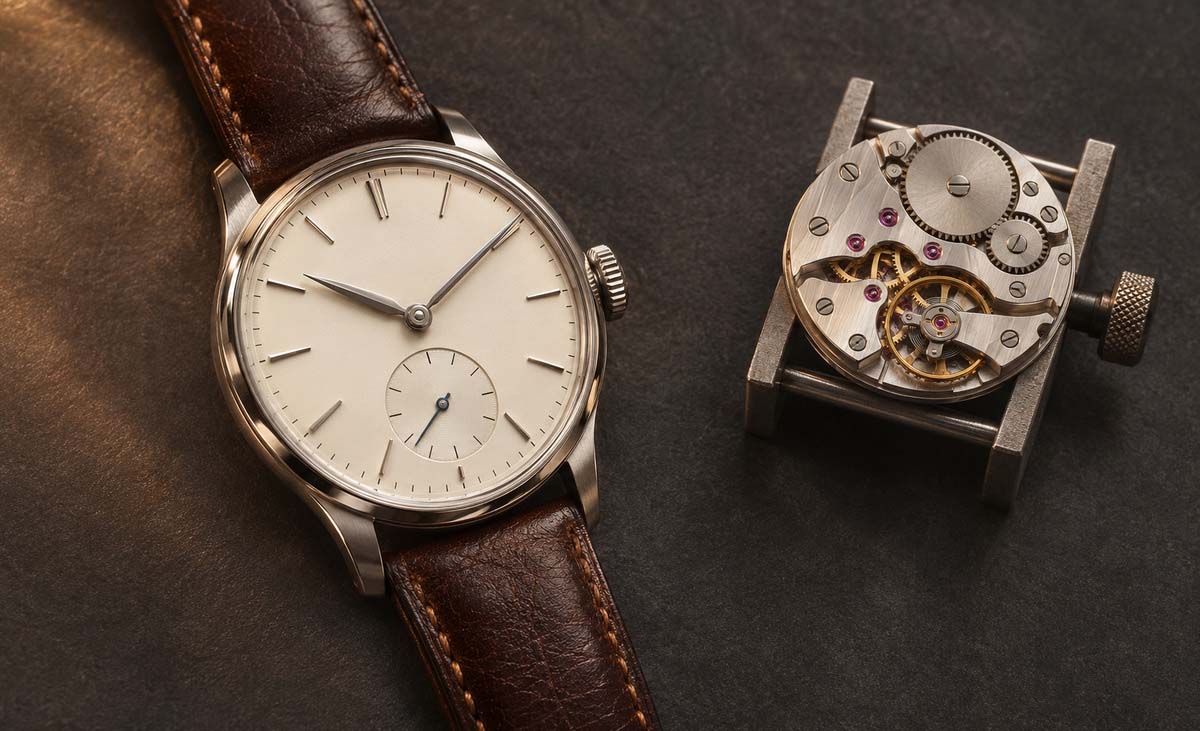
A mechanical watch asks a little more of its owner. It may need winding before breakfast, a time adjustment after a few days on the dresser, or a service after years of regular wear. A basic quartz watch generally keeps better time with less attention. Yet mechanical watches continue to earn a place on people’s wrists because the experience extends beyond reading the hour.
Much of that appeal comes from understanding what happens beneath the dial. A mechanical movement stores energy, delivers it through a series of gears, and regulates its release through a small assembly that oscillates thousands of times an hour. No battery powers the process. The watch runs on energy supplied by the person wearing or winding it. However, it is worth noting that the market is currently flooded with replica watches—especially those imitating well-known brands—so you should exercise caution when making a purchase.
Inside the Movement
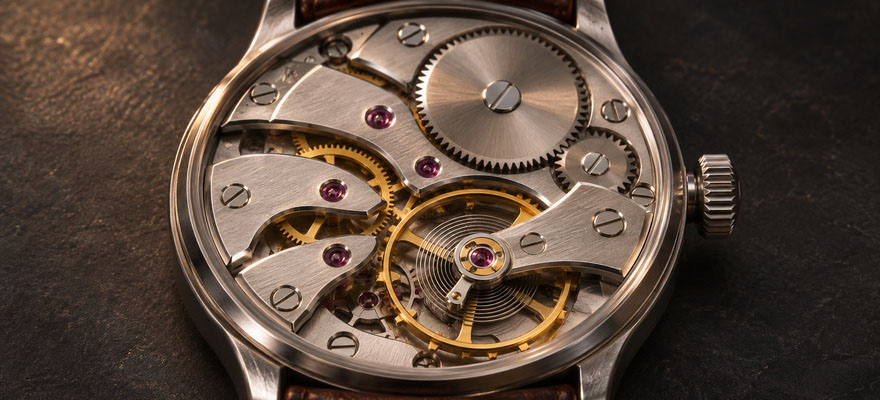
The power source is the mainspring, a coiled strip of metal housed inside a barrel. Turning the crown winds the spring and stores energy. As the mainspring gradually unwinds, it drives the gear train, which transfers power through the movement.
The escapement controls how that energy is released. In a conventional Swiss lever movement, the escape wheel and pallet fork work together to deliver impulses to the balance wheel. The balance swings back and forth, while its hairspring provides the restoring force that helps maintain a regular rhythm. That interaction produces the familiar ticking sound.
The seconds hand advances in small steps corresponding to the movement’s beat rate. On many mechanical watches, those steps occur quickly enough to look like a smooth sweep. It is one of the easiest mechanical details to appreciate without opening the case.
Manual and Automatic Winding
Hand-wound and automatic watches share the same basic power source. The difference is how energy reaches the mainspring.
With a hand-wound movement, the owner turns the crown to wind the watch. This creates a small, regular ritual and allows manufacturers to build movements without the additional components required for automatic winding. Through a display caseback, the absence of a rotor can also leave more of the movement visible.
An automatic watch uses a weighted rotor that turns as the wearer moves. Through a winding mechanism, that motion replenishes the mainspring’s energy. Regular wear may keep the watch running, although the result depends on the movement’s efficiency and the wearer’s activity. Spending an entire day at a desk does not necessarily provide a full wind.
Neither system is inherently superior. Manual winding suits someone who enjoys handling a watch each morning. Automatic winding offers convenience for a watch worn frequently.
What Accuracy Really Means
Mechanical accuracy depends on several interacting factors. Temperature, position, magnetism, shocks, and the condition of the lubricants can affect the rate. The amount of energy remaining in the mainspring can also influence performance.
A watch might gain a few seconds while being worn and lose some of that gain when left in a particular position overnight. This behavior reflects the physical nature of the mechanism. It does not automatically indicate a defect.
Consistency is often more useful to observe than a single reading. A steady daily gain gives a watchmaker different information from a sudden, substantial change in rate. Owners who want to understand their watch’s behavior should compare it with a reliable reference over several days under normal wearing conditions.
Looking Beyond the Specifications
Specifications describe only part of a mechanical watch. Case diameter matters, but lug length, thickness, and case shape can have an equally strong effect on comfort. A watch with modest dimensions may sit awkwardly if its lugs extend beyond the wrist. A larger model with curved lugs may feel surprisingly natural.
The crown should be easy to grip, the hands should be readable against the dial, and the bracelet or strap should support the case without creating pressure points. These details become more noticeable after eight hours of wear than they do during a brief inspection.
Movement finishing deserves a similarly careful look. Polished bevels, decorative striping, and blued screws can add visual interest, but decoration alone does not establish reliability or precision. Good movement design also involves stable timekeeping, efficient winding, and construction that allows proper servicing.
Caring for a Mechanical Watch
Routine care does not need to be complicated. Follow the manufacturer’s winding and setting instructions, particularly when adjusting a calendar. Some movements can be damaged if the date is changed manually while the automatic date-change mechanism is engaged.
Water resistance also requires attention. Gaskets age, and a watch’s original rating does not guarantee that it remains equally resistant years later. If the watch is regularly exposed to water, appropriate pressure testing is a sensible part of ownership.
Service requirements vary by movement, use, and condition. Persistent changes in accuracy, reduced running time, or unusual winding behavior deserve professional inspection. Keeping the exterior clean and avoiding unnecessary exposure to strong magnets or heavy impacts can help prevent problems between services.
A well-chosen mechanical watch becomes familiar through daily use: the resistance of the crown, the weight of the case, the way the dial catches light. Its value as an everyday object often rests in those details. The engineering gives you something to understand; wearing it gives you a reason to care.